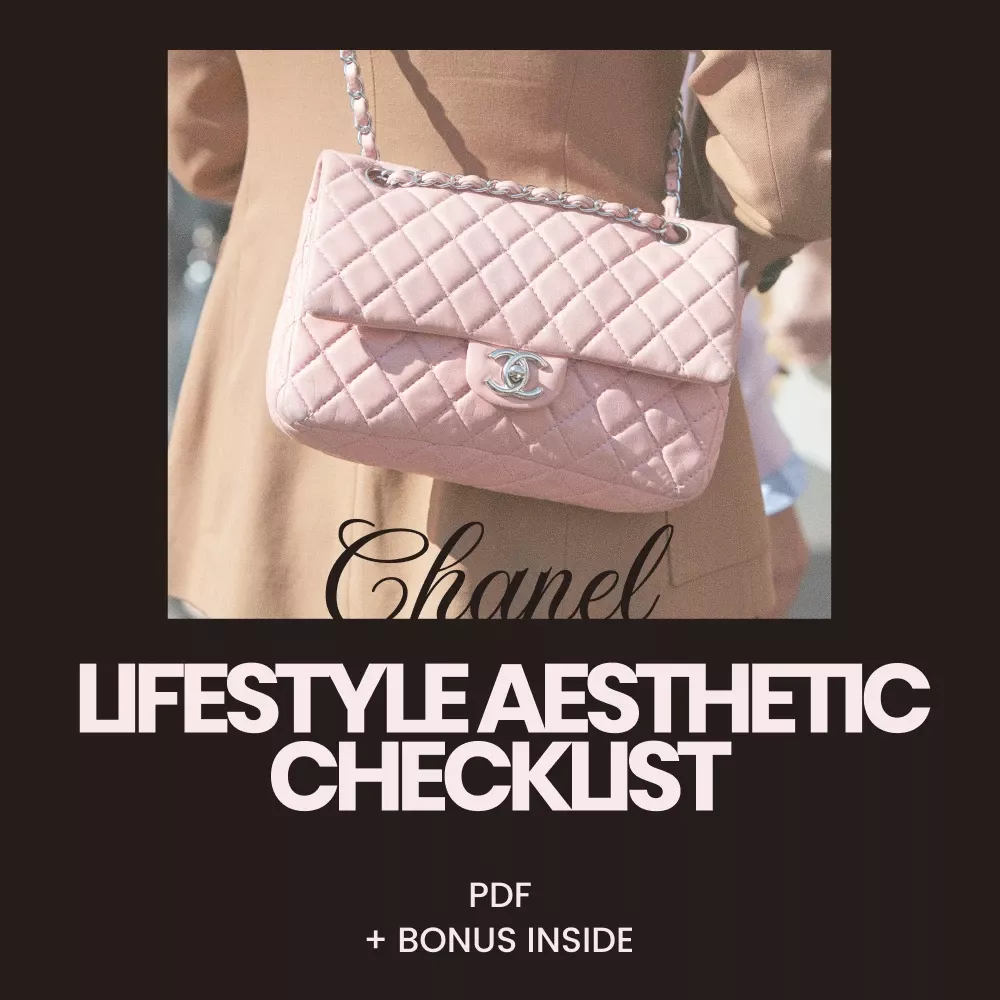


Elevate Your Style with the Ultimate Chanel Lifestyle Aesthetic Checklist
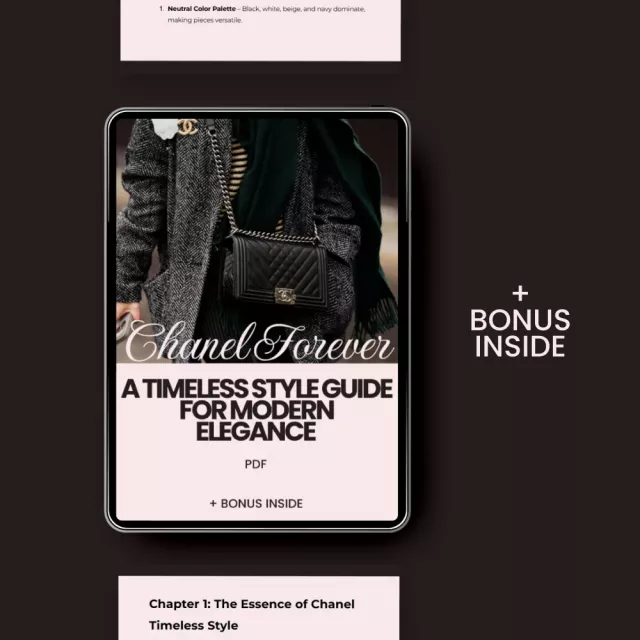
The Chanel Lifestyle Aesthetic Checklist is more than a fashion resource — it’s your personal roadmap to timeless elegance, quiet confidence, and effortless sophistication. Inspired by the enduring philosophy of Chanel and its visionary founder Coco Chanel, this beautifully structured digital checklist helps you refine your wardrobe, sharpen your shopping decisions, and fully embody the true chanel lifestyle aesthetic. If you’ve ever wanted to curate a wardrobe that feels polished, intentional, and eternally chic, this guide was created for you.
What You’ll Learn Inside
- How to choose timeless pieces over trends
- The essentials of a refined capsule wardrobe
- How to identify high-quality fabrics and tailoring
- Elegant accessorizing and polished grooming basics
- The confidence mindset behind the chanel lifestyle aesthetic
From structured silhouettes and neutral palettes to iconic staples like the tweed jacket, quilted handbag, and little black dress, this checklist turns the principles of the chanel lifestyle aesthetic into clear, actionable steps you can apply immediately.
Who Is This For?
This checklist is perfect for fashion lovers, aspiring minimalists, luxury enthusiasts, and anyone looking to refine their personal style with intention. Whether you’re rebuilding your wardrobe, stepping into a more elevated phase of life, or simply drawn to timeless sophistication, this guide gives you clarity and direction.
Why This Checklist Is Different
- Practical, not overwhelming – Clear, actionable checkpoints instead of vague style advice.
- Holistic approach – Covers wardrobe, accessories, grooming, and mindset.
- Timeless framework – Focuses on longevity, quality, and confident presence.
- Instant digital download – Start refining your style immediately.
Unlike generic fashion guides, the Chanel Lifestyle Aesthetic Checklist emphasizes internal confidence as much as external appearance. True Chanel energy is internal first, external second — and this resource helps you cultivate both.
Benefits You’ll Experience
- Make smarter, more intentional shopping decisions
- Avoid trend-driven impulse purchases
- Create a cohesive, elegant capsule wardrobe
- Develop a signature look that feels authentic and refined
- Exude quiet luxury and polished confidence daily
If you’re ready to embody the chanel lifestyle aesthetic and transform your wardrobe into a reflection of timeless elegance, this checklist is your starting point.
Download Today
Step into effortless sophistication and refined confidence. Download the Chanel Lifestyle Aesthetic Checklist now and begin building a wardrobe — and presence — that never goes out of style.
SHIPPING
We are proud to offer international shipping services that currently operate in over 200 countries and islands world wide. Nothing means more to us than bringing our customers great value and service. We will continue to grow to meet the needs of all our customers, delivering a service beyond all expectation anywhere in the world.
Do you ship worldwide?
Yes. We provide free shipping to over 200 countries around the world. However, there are some locations we are unable to ship to. If you happen to be located in one of those countries we will contact you.
What about customs?
We are not responsible for any custom fees once the items have been shipped. By purchasing our products, you consent that one or more packages may be shipped to you and may get custom fees when they arrive to your country.
How long does shipping take?
Shipping time varies by location. These are our estimates:| Location | *Estimated Shipping Time |
|---|---|
| United States | 5-20 Business days |
| Canada, Europe | 5-20 Business days |
| Australia, New Zealand | 5-20 Business days |
| Central & South America | 5-25 Business days |
| Asia | 5-20 Business days |
| Africa | 5-25 Business days |
Do you provide tracking information?
Yes, you will receive an email once your order ships that contains your tracking information. If you haven’t received tracking info within 5 days, please contact us.
My tracking says “no information available at the moment”.
For some shipping companies, it takes 2-5 business days for the tracking information to update on the system. If your order was placed more than 5 business days ago and there is still no information on your tracking number, please contact us.
Will my items be sent in one package?
For logistical reasons, items in the same purchase will sometimes be sent in separate packages, even if you've specified combined shipping.
If you have any other questions, please contact us and we will do our best to help you out.
RETURNS
Order cancellation
All orders can be cancelled until they are shipped. If your order has been paid and you need to make a change or cancel an order, you must contact us within 12 hours. Once the packaging and shipping process has started, it can no longer be cancelled.
Refunds
Your satisfaction is our #1 priority. Therefore, you can request a refund or reshipment for ordered products if:
- If you did not receive the product within the guaranteed time (45 days not including 1-3 day processing) you can request a refund or a reshipment.
- If you received the wrong item you can request a refund or a reshipment.
- If you do not want the product you’ve received you may request a refund but you must return the item at your expense and the item must be unused.
We do not issue the refund if:
- Your order did not arrive due to factors within your control (i.e. providing the wrong shipping address)
- Your order did not arrive due to exceptional circumstances outside the control of ultimateselectionarena.shop (i.e. not cleared by customs, delayed by a natural disaster).
- Other exceptional circumstances outside the control of ultimateselectionarena.shop.
*You can submit refund requests within 15 days after the guaranteed period for delivery (45 days) has expired. You can do it by sending a message on Contact Us page
If you are approved for a refund, then your refund will be processed, and a credit will automatically be applied to your credit card or original method of payment, within 14 days.
Exchanges
If for any reason you would like to exchange your product, perhaps for a different size in clothing, you must contact us first and we will guide you through the steps.
Please do not send your purchase back to us unless we authorise you to do so.
Order cancellation
All orders can be cancelled until they are shipped. If your order has been paid and you need to make a change or cancel an order, you must contact us within 12 hours. Once the packaging and shipping process has started, it can no longer be cancelled.
Refunds
Your satisfaction is our #1 priority. Therefore, you can request a refund or reshipment for ordered products if:
- If you did not receive the product within the guaranteed time( 45 days not including 2-5 day processing) you can request a refund or a reshipment.
- If you received the wrong item you can request a refund or a reshipment.
- If you do not want the product you’ve received you may request a refund but you must return the item at your expense and the item must be unused.
We do not issue the refund if:
- Your order did not arrive due to factors within your control (i.e. providing the wrong shipping address)
- Your order did not arrive due to exceptional circumstances outside the control of ultimateselectionarena.shop (i.e. not cleared by customs, delayed by a natural disaster).
- Other exceptional circumstances outside the control of https://ultimateselectionarena.shop
*You can submit refund requests within 15 days after the guaranteed period for delivery (45 days) has expired. You can do it by sending a message on Contact Us page
If you are approved for a refund, then your refund will be processed, and a credit will automatically be applied to your credit card or original method of payment, within 14 days.
Exchanges
If for any reason you would like to exchange your product, perhaps for a different size in clothing. You must contact us first and we will guide you through the steps.
Please do not send your purchase back to us unless we authorise you to do so.
Customer Reviews
Write a Review
We Think You’ll Love
Top picks just for you














Style fades, elegance endures — four words that replaced my entire shopping philosophy.
The fabric-first section reframed every shopping decision I'd been making incorrectly. Checking garment structure and lining before anything else, and actively avoiding stretchy or thin materials, sounds obvious until you realize how rarely you've actually done it. This checklist made the habit automatic rather than occasional.
I've collected fashion content for years in a half-organized folder of screenshots, bookmarks, and saved articles that never quite added up to a clear philosophy. What this checklist does differently is offer a sequential framework rather than scattered advice — six sections that build on each other from wardrobe structure through fabric evaluation, accessories, grooming, and into the confidence code. The fabric-first principle changed my behavior most: I had been evaluating garments by how they looked on a hanger rather than checking stitching quality, lining construction, or whether the material would hold its shape past a season. Running through those four checkpoints — natural materials, high-quality stitching, garment structure and lining, no overly stretchy or thin fabrics — changed both the speed and the quality of my shopping. The closing principle of the confidence code — true Chanel energy is internal first, external second — is the kind of reminder that style resources rarely include but probably should lead with.
Pearl jewelry as a signature classic, not a grandmother's heirloom — finally framed correctly.
The capsule wardrobe section is concise and exactly right: tailored blazer, quilted handbag, LBD, ballet flats or slingbacks, tweed jacket. Five pieces that generate more daily combinations than triple that number of trend-driven alternatives. The note that the tweed jacket remains the gold standard of polished femininity gives historical grounding to what otherwise reads as just a shopping list ✨
Avoiding overly stretchy or thin fabrics — the one material filter I'd never thought to verbalize.
The six sections are well-organized and the Chanel confidence code — walk with poise, speak with calm assurance, choose quality experiences, invest thoughtfully — extends the guide well beyond a shopping reference. The mild limitation is that the grooming section feels lighter than the others; neutral manicures and subtle fragrance are mentioned but not given the same depth as fabric quality or capsule wardrobe building. Strong overall framing, slightly uneven depth across sections.
Minimal gold accents over statement hardware — obvious once stated, genuinely missed before reading this.
Quality speaks before logos do. That line belongs printed somewhere permanent.
Having the grooming section framed as holistic — extending beyond clothing into presence and demeanor — was unexpected and welcome. Low buns and soft waves over anything elaborate, soft polished makeup, subtle fragrance: the checklist doesn't treat personal presentation as separate from style, it treats it as the final layer of the same intention. That integration is rare in fashion content.
Effortless refinement, not excess — the accessories instruction I needed stated in exactly that order.
The checklist arrived at a specific inflection point: I'd just cleared out a wardrobe that had cost me more than I wanted to calculate and replaced almost none of it with things I actually wanted to wear. The clarity problem wasn't budget; it was criteria. The fabric-first section gave me a filter immediately — natural materials, high-quality stitching, garment structure and lining, no overly stretchy or thin fabrics. Those four checkpoints eliminated most of the things I would have bought and not worn. The capsule wardrobe framework was the complement: tailored blazer, quilted handbag, LBD, ballet flats or slingbacks, tweed jacket — five categories that generate coherent outfits because they're designed to work together rather than to be individually impressive. The confidence code was the part I didn't know I needed — true Chanel energy is internal first, external second. Keeping that sequence correct is harder than building a wardrobe, but it is ultimately the point.
Checking lining quality in stores now feels as automatic as checking the price tag.
The prioritize timeless over trendy section is strong — structured silhouettes, neutral color palette, longevity in fabric and tailoring is the right foundation. Where the checklist left me wanting more was the confidence code section; invest thoughtfully and choose quality experiences are identified as the right principles but move through them quickly, and each could support a full paragraph. The framework is exactly right; the balance of depth across sections is slightly uneven.
Walking with poise as a practice, not a performance — that single reframe matters.
Printable, returnable, and the first style reference I've used as an actual daily decision filter.
What makes this checklist work is the sequence — fabric first, then silhouette, then accessories, then grooming, then confidence. Most style content addresses these in random order or treats them as unrelated. The neutral color palette principle feeding into the structured handbag recommendation feeding into the minimal gold accents note creates coherence across sections rather than isolated tips that each require separate interpretation.
Classic sunglasses on the accessories list — the only item I already owned and had been using correctly 😄
The accessories section earns its own place here rather than functioning as an afterthought. Pearl jewelry, structured handbags, minimal gold accents, classic sunglasses — each selected for longevity rather than trend relevance. The reminder that the goal is effortless refinement and not excess applies as much to accessories as to every other category, and placing it specifically there was the right call.
I have a particular blind spot for buying things that feel luxurious without being durable — soft fabrics that pill after three wears, structured bags with stitching that unravels inside a season. The fabric-first section addressed that blind spot more directly than anything I'd read before. The instruction to check garment structure and lining alongside stitching quality moved my evaluation criteria from surface to construction. Applying the loud logos section to things I already owned rather than just future purchases revealed a wardrobe significantly noisier than I had thought. The confidence code was the one I returned to most: the idea that true Chanel energy is internal first, external second runs counter to most fashion content, which treats confidence as an outcome of what you wear rather than a precondition for wearing it well 🖤
Natural materials — wool, silk, cotton, tweed — as the default, not the premium option.
The tailored blazer anchoring the capsule wardrobe list is correct and, frankly, non-negotiable.
Six sections that move from wardrobe building through fabric evaluation to grooming and mindset is genuinely the right arc. I'd give this five stars if the effortless grooming section had the same specificity as the fabric-first section; both matter equally but only one is treated with real detail. What's there is accurate, just not fully developed. The closing observation that quality, refinement, and intentional living form the core of the aesthetic is well-placed.
Speak with calm assurance listed alongside stitching quality — that pairing is the whole point.
A checklist works best when each item is verifiable rather than interpretive. Here, you either chose a structured silhouette or you didn't. The stitching quality either holds up to examination or it doesn't. The accessories are either understated or competing. That binary clarity is what makes this useful as an ongoing reference rather than aspirational content you read once and forget.
🖤🪡💎✨🤍
My approach to fashion had been reactive rather than intentional for most of my adult life — bought on trend when affordable and off-trend by the time it arrived. The checklist gave me the first organizing principle I'd consistently applied: timeless over trendy, structured silhouettes, neutral color palette, no loud logos, longevity in fabric and tailoring. These aren't new ideas, but having them as a sequential checklist rather than aspirational copy gave them practical weight I hadn't found before. The fabric-first section built the filter further — wool, silk, cotton, tweed as material preferences; stitching and lining as quality signals before price or brand. The confidence code section is what repositioned the whole document from a style guide to something more complete: walking with poise and speaking with calm assurance listed as checklist items alongside quilted handbags and ballet flats makes the internal work feel as concrete and actionable as the external. The closing — master the aesthetic, curate with purpose — is the right note to end on.
The LBD earning its capsule wardrobe spot with work-to-dinner range is exactly right.
Structured handbags as a daily non-negotiable, not an occasional upgrade — this shifted my baseline.
The core principles here — timeless over trendy, fabric first, understated accessories — are sound and the checklist format makes them easy to return to. My hesitation is that several sections feel like outlines rather than completed guidance; grooming and the confidence code in particular needed more development to match the depth of fabric-first and capsule wardrobe. As a starting point for someone new to this aesthetic it works, but the depth is uneven.
Invest thoughtfully on the checklist alongside structured silhouettes — the scope of this guide is exactly right.
Having the confidence code as its own section — separate from wardrobe and grooming — makes this read as a complete lifestyle guide rather than a shopping filter. Walk with poise, speak with calm assurance, choose quality experiences, invest thoughtfully: these aren't clothing decisions, but they determine whether clothing decisions feel cohesive or performative. True Chanel energy is internal first, external second is the line that makes everything else in the document make sense ✨
Subtle fragrance on the grooming list — an overlooked detail that completes the entire aesthetic.
What this checklist gave me that a longer guide wouldn't have is density without dilution. Each of the six sections contains exactly the instruction needed without expanding into territory that softens the principle. The fabric-first section — natural materials, high-quality stitching, garment structure and lining, no overly stretchy or thin materials — is four items that represent a complete buying filter I now run through in stores before considering price or brand. The capsule wardrobe section gave me vocabulary for what I'd been trying to build but hadn't defined: tailored blazer, quilted handbag, LBD, ballet flats or slingback heels, tweed jacket — five categories that work as a system. The tweed jacket being described as the gold standard of polished femininity framed it as a historical anchor rather than a trend, which changed how I thought about investing in one. The section I return to most is the confidence code — internal first, external second is easy to state and difficult to maintain, but having it written alongside stitching quality and pearl jewelry makes the sequence harder to invert.
A clear and well-sequenced reference — fabric first, capsule staples, accessories, grooming, mindset is the correct order and this guide follows it. The checklist is strongest in the first three sections where every item is specific and actionable. The grooming and confidence sections are organized correctly but would benefit from the same level of concrete detail. Strong as a daily reference card; some sections remain closer to an outline.
Neutral manicures listed alongside fabric stitching — the holistic framing earns its claim.
Low bun or soft waves as the daily hair default — stated plainly and freeing.
The sequencing of this checklist is what makes it effective. Starting with timeless over trendy establishes the decision framework, the capsule wardrobe gives it structure, fabric first provides evaluation criteria, accessories and grooming layer on top, and the confidence code closes with the internalized version of everything the earlier sections build. Reading it in order once is useful; returning to individual sections as reference points over time is more useful still.
Fabric longevity closing the timeless-over-trendy section — quietly the most important item there 🖤
I want to describe this precisely because it changed something specific in my behavior, not just my thinking. I've always had an interest in the Chanel aesthetic — the visual language of it, the tailored restraint, the particular neutrals — but I'd been consuming it as inspiration without a usable filter for translating it into decisions. This checklist solved that problem by being structured and verifiable rather than evocative and vague. The timeless-over-trendy section starts simply: structured silhouettes, neutral color palette, avoid loud logos, look for longevity in fabric and tailoring. I'd agreed with all four of these in principle for years. The difference was seeing them formatted as a checklist, which meant I started actually checking rather than assuming I'd already internalized them. The fabric-first section is where my behavior changed most concretely. I had been buying expensive pieces without examining lining, evaluating stitching without understanding what I was looking for, and assuming price predicted quality in a way the market doesn't consistently reward. Running through the four points — natural materials, high-quality stitching, garment structure and lining, no overly stretchy or thin materials — in that order, in stores and online, removed most of the purchases I would have later regretted. The accessories section confirmed what I'd been doing right: pearl jewelry as a signature classic, structured handbags, minimal gold accents, classic sunglasses — stated together they form a coherent visual vocabulary I could check against rather than improvise from scratch each time. The effortless grooming section extended the philosophy in a direction I hadn't formalized: soft polished makeup, low bun or soft waves, neutral manicures, subtle fragrance. The note that the lifestyle aesthetic is holistic — extending beyond clothing into presence and demeanor — was the most important sentence in the document for me. I had been compartmentalizing grooming as separate from style, which this identifies correctly as the mistake. The confidence code brought everything together 🖤 Walk with poise, speak with calm assurance, choose quality experiences, invest thoughtfully — and the guiding principle that true Chanel energy is internal first, external second. I have now been using this as a literal checklist for four months, returning to individual sections before shopping and before any day when I need the framework rather than the instinct. The cumulative effect is that getting dressed takes less time and the results are more consistent than at any point I can remember.
Ballet flats or slingback heels — the entire Chanel shoe philosophy in five words.
Six intelligently ordered sections, and 'style fades, elegance endures' closing the first is the best short summary of this aesthetic I've encountered. My observation is that the checklist occasionally gestures toward depth it doesn't fully reach — the confidence code in particular feels like a preview of a longer conversation worth having. What's here is accurate; it could absorb significantly more content without losing its accessible format.
Choosing quality experiences alongside the wardrobe and grooming items made the whole document feel cohesive.
A quiet luxury reference I've returned to more than any longer guide I've saved.
The capsule wardrobe list is deceptively short — tailored blazer, quilted handbag, LBD, ballet flats or slingbacks, tweed jacket. Five items that represent a complete foundation rather than a starting point to expand from indefinitely. The framing of these pieces as reflecting refined simplicity made the constraint feel productive rather than limiting, which is exactly the right relationship to have with a capsule wardrobe.
🌿🤍🛍️✨🖤
Grooming was the section I didn't expect to take seriously and ended up thinking about longest. The lifestyle aesthetic is holistic — it extends beyond clothing into presence and demeanor — sounds like a phrase you'd skim past until you apply it to a morning where the outfit was considered but the rest of the presentation was rushed. I've had those mornings, and the clothes always look less intentional than they were. Soft polished makeup, low bun or soft waves, neutral manicures, subtle fragrance: these are small individual decisions that compound into a consistent overall presence. Taking them as seriously as fabric quality and capsule staples was the adjustment the checklist pushed me toward. The confidence code reinforced this — internal first, external second means the checklist isn't asking you to perform an aesthetic but to embody it, which requires the grooming and demeanor details to carry weight alongside the wardrobe ones. Several months of using all six sections consistently has clarified something I hadn't articulated before: the Chanel aesthetic is less about individual pieces and more about the consistency with which every element points in the same direction.
Knowing quiet luxury and having a working checklist for it — the gap was larger than expected.
The checklist covers the right territory — timeless over trendy, fabric first, understated accessories, the confidence code — and the principle that quality speaks before logos do is the right anchor. My honest hesitation is that most sections are short enough to function as headers rather than guidance. Someone already familiar with the Chanel aesthetic will find this a useful reminder; someone newer to it will want more explanation behind each item. A strong structure that could support a considerably more developed document.
Every section connects — fabric quality, capsule structure, grooming, mindset. Nothing reads as isolated.
Including the Chanel confidence code as its own section is what earns this the 'lifestyle' label. Most style resources stop at clothing; this one recognizes that speaking with calm assurance and investing thoughtfully are as much a part of the aesthetic as pearl jewelry and a quilted handbag. Treating demeanor as a checklist item gives it the same operational weight as fabric choice, which is the correct relationship between them.
Coming to this as someone who'd been building toward the Chanel aesthetic through individual purchases rather than a systematic approach, the capsule wardrobe framework — tailored blazer, quilted handbag, LBD, ballet flats or slingbacks, tweed jacket — was what I'd been missing. Five categories designed to work together rather than to be individually impressive. Moving through the fabric-first section alongside the capsule list was the useful pairing: knowing which categories to shop for and knowing how to evaluate within each category changed both the speed and quality of my decisions at the same time.
🌸🖤👜💎✨
The neutral color palette guidance — black, white, beige, navy — is immediately applicable and the right anchor for everything that follows. The checklist is strongest in its first three sections; the grooming and confidence sections are correctly categorized but would benefit from the same precision that makes the fabric-first and capsule wardrobe sections so usable. The strongest parts more than justify returning to this as a reference.
Writing a long review of a short document requires some justification, and mine is that the checklist's impact on my daily decisions has been specific and measurable, which makes it worth describing with the same specificity. I've spent a significant portion of my adult life interested in the Chanel aesthetic without having a clear decision framework for living it — a gap this checklist closed in a way that longer, more elaborate resources hadn't. The timeless-over-trendy section sounds like principle-level guidance until you apply it as a filter: structured silhouettes yes, trend-driven pieces no; neutral color palettes yes; longevity in fabric and tailoring as a shopping criterion rather than an aspiration. Applied as literal checkboxes to a shopping list, I eliminated roughly half the things I was considering on my last several shopping trips. The fabric-first section built the filter further. Checking garment structure and lining alongside stitching quality, and actively avoiding overly stretchy or thin materials, created a physical evaluation process I now run through before any significant clothing purchase. The outcomes have been consistently better than my previous approach of evaluating by appearance and trusting price to signal quality. The accessories section confirmed and clarified what I'd been working toward: pearl jewelry as a signature classic, structured handbags, minimal gold accents, classic sunglasses — not as separate choices but as a coherent vocabulary. The reminder that the goal is effortless refinement and not excess applies to accessories more than any other category, because it's where excess is easiest to accumulate and most visible when present. The effortless grooming section extended the framework into territory I hadn't formalized: soft polished makeup, low bun or soft waves, neutral manicures, subtle fragrance. The note that the lifestyle aesthetic is holistic — extending beyond clothing into presence and demeanor — is the sentence that reoriented the whole document for me. I had been treating style and demeanor as parallel but separate tracks. They aren't, and the checklist makes that integration explicit rather than implied. The confidence code brought it to the right conclusion: walk with poise, speak with calm assurance, choose quality experiences, invest thoughtfully. True Chanel energy is internal first, external second, and the sequence matters more than any individual item in the checklist. I have now been using all six sections consistently for five months, returning to the document before shopping and before days when I need the framework rather than the instinct. The investment of reading time has been minimal. The clarifying effect on daily decisions has been significant.