


Unlock the Secrets Behind the Iconic Chanel Brand
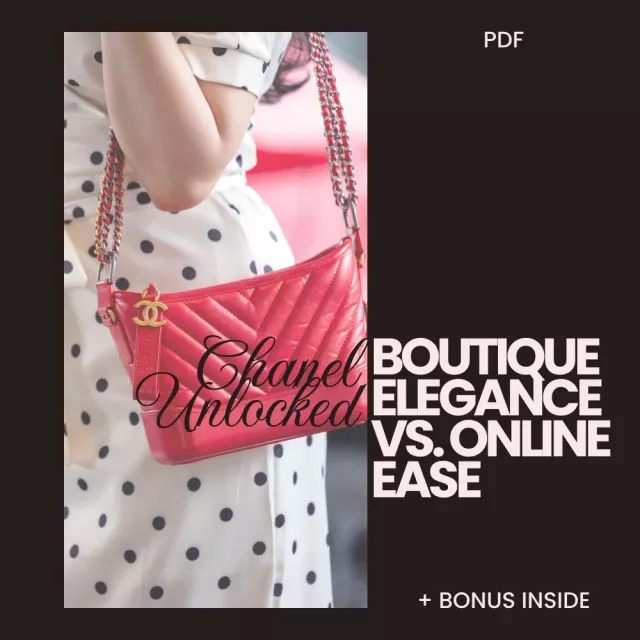
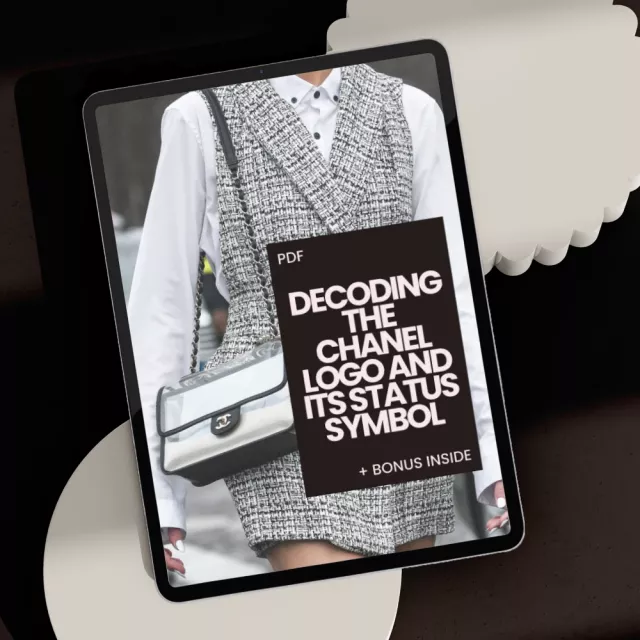
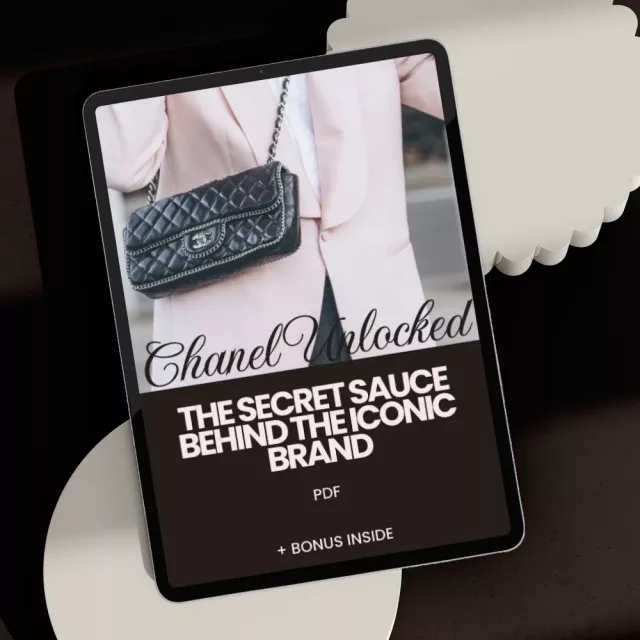
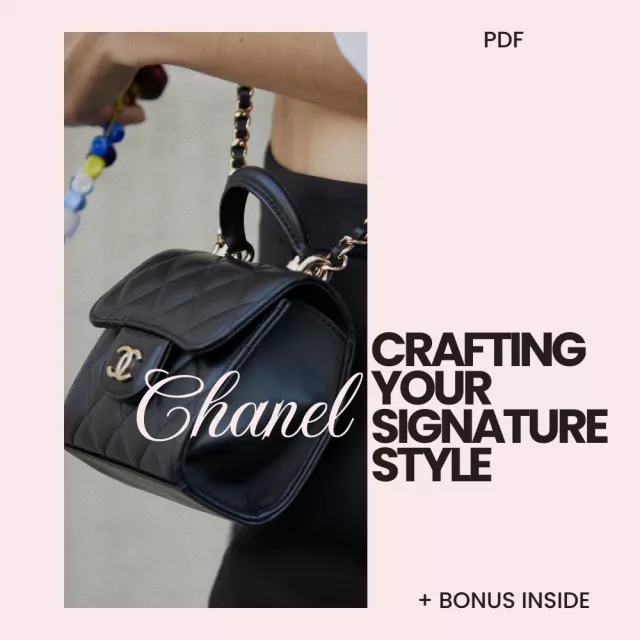
Discover the power of luxury branding and the psychology behind one of the most coveted fashion houses in the world with the Chanel Mindset: Decoding the Psychology of Luxury eBook. This comprehensive guide delves deep into the strategies and emotional triggers that make the Chanel brand a timeless symbol of elegance, freedom, and desire. Whether you’re a fashion enthusiast, an aspiring brand strategist, or simply curious about the world of luxury, this eBook is your ultimate key to understanding the emotional appeal of Chanel’s legacy and its lasting impact on the fashion industry.
Inside this guide, you’ll uncover:
- Chanel’s Origins and Identity – Learn how Gabrielle “Coco” Chanel’s vision birthed a global icon and how its core brand values shaped the brand’s identity.
- The Psychology of Luxury – Understand why consumers crave status and the emotional triggers Chanel skillfully exploits to maintain its allure.
- Chanel’s Signature Elements – Discover the role of iconic pieces like the Little Black Dress, Chanel No. 5, and timeless accessories in creating desire.
- Storytelling and Myth-Making – Explore how Chanel weaves aspirational narratives and uses celebrities and influencers to amplify its reach.
- The Science of Exclusivity – Understand how scarcity, limited editions, and VIP experiences make the brand more desirable than ever.
- Digital and AI in Modern Luxury – Learn how Chanel embraces technology with AI-powered marketing, virtual try-ons, and digital fashion shows.
- Common Brand Mistakes – Avoid common pitfalls by analyzing competitor failures and aligning your brand messaging.
- Next Steps for Aspiring Brand Strategists – Gain practical tools and exercises to apply the psychology of Chanel to your own brand strategy.
Who is this eBook for?
This guide is perfect for fashion lovers, marketers, and entrepreneurs who want to harness the psychology of luxury branding to elevate their own businesses. It’s also an invaluable resource for anyone fascinated by the power of brand identity and the emotional connection brands create with consumers.
What makes it different?
Unlike other generic guides, this eBook takes a detailed, research-driven approach to decoding the Chanel brand psychology. You won’t just learn the theory; you’ll gain actionable insights and practical tools to apply the principles to your own brand, making this a truly unique resource.
Download your copy now
and start decoding the secrets of luxury branding with Chanel Mindset: Decoding the Psychology of Luxury. Understand how to build a brand that lasts and captivates consumers just as Chanel has done for over a century.
SHIPPING
We are proud to offer international shipping services that currently operate in over 200 countries and islands world wide. Nothing means more to us than bringing our customers great value and service. We will continue to grow to meet the needs of all our customers, delivering a service beyond all expectation anywhere in the world.
Do you ship worldwide?
Yes. We provide free shipping to over 200 countries around the world. However, there are some locations we are unable to ship to. If you happen to be located in one of those countries we will contact you.
What about customs?
We are not responsible for any custom fees once the items have been shipped. By purchasing our products, you consent that one or more packages may be shipped to you and may get custom fees when they arrive to your country.
How long does shipping take?
Shipping time varies by location. These are our estimates:| Location | *Estimated Shipping Time |
|---|---|
| United States | 5-20 Business days |
| Canada, Europe | 5-20 Business days |
| Australia, New Zealand | 5-20 Business days |
| Central & South America | 5-25 Business days |
| Asia | 5-20 Business days |
| Africa | 5-25 Business days |
Do you provide tracking information?
Yes, you will receive an email once your order ships that contains your tracking information. If you haven’t received tracking info within 5 days, please contact us.
My tracking says “no information available at the moment”.
For some shipping companies, it takes 2-5 business days for the tracking information to update on the system. If your order was placed more than 5 business days ago and there is still no information on your tracking number, please contact us.
Will my items be sent in one package?
For logistical reasons, items in the same purchase will sometimes be sent in separate packages, even if you've specified combined shipping.
If you have any other questions, please contact us and we will do our best to help you out.
RETURNS
Order cancellation
All orders can be cancelled until they are shipped. If your order has been paid and you need to make a change or cancel an order, you must contact us within 12 hours. Once the packaging and shipping process has started, it can no longer be cancelled.
Refunds
Your satisfaction is our #1 priority. Therefore, you can request a refund or reshipment for ordered products if:
- If you did not receive the product within the guaranteed time (45 days not including 1-3 day processing) you can request a refund or a reshipment.
- If you received the wrong item you can request a refund or a reshipment.
- If you do not want the product you’ve received you may request a refund but you must return the item at your expense and the item must be unused.
We do not issue the refund if:
- Your order did not arrive due to factors within your control (i.e. providing the wrong shipping address)
- Your order did not arrive due to exceptional circumstances outside the control of ultimateselectionarena.shop (i.e. not cleared by customs, delayed by a natural disaster).
- Other exceptional circumstances outside the control of ultimateselectionarena.shop.
*You can submit refund requests within 15 days after the guaranteed period for delivery (45 days) has expired. You can do it by sending a message on Contact Us page
If you are approved for a refund, then your refund will be processed, and a credit will automatically be applied to your credit card or original method of payment, within 14 days.
Exchanges
If for any reason you would like to exchange your product, perhaps for a different size in clothing, you must contact us first and we will guide you through the steps.
Please do not send your purchase back to us unless we authorise you to do so.
Order cancellation
All orders can be cancelled until they are shipped. If your order has been paid and you need to make a change or cancel an order, you must contact us within 12 hours. Once the packaging and shipping process has started, it can no longer be cancelled.
Refunds
Your satisfaction is our #1 priority. Therefore, you can request a refund or reshipment for ordered products if:
- If you did not receive the product within the guaranteed time( 45 days not including 2-5 day processing) you can request a refund or a reshipment.
- If you received the wrong item you can request a refund or a reshipment.
- If you do not want the product you’ve received you may request a refund but you must return the item at your expense and the item must be unused.
We do not issue the refund if:
- Your order did not arrive due to factors within your control (i.e. providing the wrong shipping address)
- Your order did not arrive due to exceptional circumstances outside the control of ultimateselectionarena.shop (i.e. not cleared by customs, delayed by a natural disaster).
- Other exceptional circumstances outside the control of https://ultimateselectionarena.shop
*You can submit refund requests within 15 days after the guaranteed period for delivery (45 days) has expired. You can do it by sending a message on Contact Us page
If you are approved for a refund, then your refund will be processed, and a credit will automatically be applied to your credit card or original method of payment, within 14 days.
Exchanges
If for any reason you would like to exchange your product, perhaps for a different size in clothing. You must contact us first and we will guide you through the steps.
Please do not send your purchase back to us unless we authorise you to do so.
Customer Reviews
Write a Review
We Think You’ll Love
Top picks just for you












The chapter on emotional triggers completely changed how I think about my own brand positioning.
Finally a guide that explains WHY people pay for luxury, not just what luxury looks like. The section on the CC logo and color psychology was surprisingly deep for how concise it was. I've already started applying the scarcity framework to my boutique.
✨👜🖤
The Gabrielle Bag mini case study in Chapter 1 alone was worth reading the whole thing. Narrative-first marketing is something I've been doing wrong for years.
Really solid breakdown of how heritage creates cultural authority.
I've read a lot of branding books and most of them recycle the same ideas. This one actually digs into the psychology — the part about dopamine activation when purchasing luxury items, and how Chanel No.5 functions as a mobile olfactory logo, is the kind of analysis I've never seen written so clearly. I run a small jewelry brand and I've been struggling with how to position it. After reading Chapter 3 on creating iconic desire, I sat down and identified my anchor product for the first time. I also restructured my Instagram based on the visual recognition section — black palette, minimal text, let the object speak. Within two weeks engagement climbed noticeably. I'm now working through the emotional trigger mapping exercise in Chapter 8.
The myth-making chapter hits different when you realize Chanel campaigns never actually sell the product.
Chapter 5 on exclusivity gave me a real framework for why I shouldn't discount my products. The loss aversion point is something I knew intuitively but couldn't articulate to clients. Now I can.
The AI application ideas woven throughout each chapter are what separate this from older marketing guides. Practical and forward-thinking.
Short, dense, and actually useful. The three brand pillars — elegance, freedom, timelessness — and the explanation of how they act as invisible magnets clicked for me immediately.
❤️🔥⭐⭐⭐⭐⭐
Before reading this, my brand story was basically a timeline of when I started the business. After the storytelling chapter, I rewrote my entire About page around an emotional narrative instead. It's a small shift but the response from customers has been completely different — people are actually connecting with it now. The Margot Robbie campaign case study in Chapter 4 helped me understand that you can generate massive engagement without ever directly selling. I applied that to my last product launch and got triple my usual email open rate.
The psychological loop in Chapter 3 — recognize, desire, internalize — is a clean and memorable model.
The section on misaligned messaging in Chapter 7 made me audit every post on my brand feed. Found three that completely contradicted my positioning. Gone now.
As someone who studied marketing formally, I was skeptical this would add anything new. I was wrong. The integration of consumer psychology with AI applications throughout each chapter is genuinely useful and not something my coursework covered. The prompt examples are especially practical — I used the sentiment analysis one as a brief for my social media manager.
Good overview but I wish the chapter on digital and AI went deeper on specific tools rather than staying conceptual.
The VIP experience section explains perfectly why Chanel show invitations are a marketing tool not just an event logistics decision.
Read this in one sitting. The Little Black Dress analysis — turning the color of mourning into a symbol of sophistication — is a brilliant entry point into how meaning gets reassigned through branding.
The final chapter exercises are genuinely actionable. Most branding books end with vague inspiration. This one ends with specific mapping tasks.
👌✨💼
Loved the Marilyn Monroe and Lily-Rose Depp comparison in the celebrity chapter — shows how the brand refreshes its aspirational figures without losing its identity.
The concept of an anchor product really resonated. I'd never thought about identifying one product to carry the full emotional weight of a brand. Now I can't stop thinking about what mine is.
Well written but the competitor case studies in Chapter 7 are anonymized which makes them feel less credible. I understand why, but it weakens the point.
The explanation of how quilted leather and chain straps function as cognitive brand shorthand without showing the logo is one of the sharpest points in the whole guide.
I've been working in fashion retail for six years and I still found new angles here, especially around how VIP exclusivity amplifies desire among those not invited. We've underused that principle completely.
The AI prompt examples throughout are actually usable, not just decorative. That alone makes this worth more than most digital marketing courses I've paid for.
A bit surface-level in places — Chapter 2 covers familiar ground if you've read any consumer psychology. But the way it ties back to Chanel-specific examples keeps it from feeling generic.
I appreciated how the guide never loses sight of practical application. Every psychological insight has a corresponding exercise or strategy.
The overexposure section should be required reading for anyone launching a new brand. Underpricing and over-discounting kill luxury positioning faster than anything else.
Coco's origin story used as a marketing framework for anyone's brand is such a smart lens. Most founders have a compelling founding story they've never properly activated.
I work in luxury hospitality and the scarcity principles here apply almost word-for-word to high-end hotel positioning. Cross-industry applicability is a sign of good fundamentals.
The emotional mapping exercise in Chapter 8 is the kind of thing that takes thirty minutes and saves you from six months of misaligned content.
Beautifully structured. Each chapter builds logically on the last — by the time you reach the brand mistakes chapter, you already have the vocabulary to understand exactly what went wrong and why.
Good content, but I expected more on digital channels specifically. The AR and virtual try-on section felt rushed compared to the depth elsewhere.
The psychological contract described in Chapter 1 — when you wear Chanel you embody its values — is the most concise explanation of brand identity I've ever read.
I run an independent accessories label and I've been struggling to justify my price point to new customers. The social signaling section gave me the language to explain it both to myself and to my audience. I rewrote my product descriptions to lean into status and craftsmanship rather than features, and conversion rate from my website went up within weeks. The section on gold accents subconsciously signaling prestige also made me reconsider my packaging — I'd been using silver simply because I liked it. Small details carry enormous psychological weight and this guide helped me see that clearly.
Every brand strategist who works with aspirational clients should read this.
The sentiment analysis AI application idea in Chapter 7 is something I'm implementing this quarter. Proactive brand health monitoring rather than reactive crisis management.
Solid but I found the bonus offer at the end a bit jarring after such a thoughtful read. Minor thing but it pulled me out of the experience.
The distinction between visibility and scarcity in Chapter 5 is nuanced in a way most marketing content isn't. You need both — and balancing them is the actual skill.
Honest and sharp. The brand mistakes chapter is unusually direct about what actually kills luxury positioning.
The idea that fragrance works as a mobile olfactory logo is one of those observations that feels obvious once you read it and completely invisible before.
I'd studied Chanel before from a fashion history angle, but the psychological framing here is different and genuinely adds dimension. The heritage-as-cultural-authority argument is well developed.
A bit short for the price point, though the density of insight per page is high. I wanted the storytelling chapter to be twice as long.
The prompt examples feel like they were written by someone who actually uses AI tools, not someone describing them from a distance. Rare.
I shared the emotional triggers section with my whole team. The breakdown of recognition, nostalgia, empowerment, and confidence as distinct levers gave us a shared language for campaign briefs.
🖤👠⭐💫✨
Short enough to finish in a few hours, dense enough to return to. The balance is right.
The section connecting Coco Chanel's personal audacity to the brand's emotional resonance today is the kind of through-line that most brand books miss entirely. Most brands talk about values as abstract lists. This shows how one woman's lived story becomes a psychological product in itself.
Excellent framing but Chapter 6 left me wanting concrete examples of brands outside Chanel that have successfully used AI for luxury personalization.
The chapter on brand mistakes is the most honest section. It doesn't soften the consequences of overextension.
Applies beyond fashion. I work in luxury travel and the exclusivity principles map perfectly.
Before reading this I thought exclusivity was just about price. After Chapter 5, I understand it's actually about controlled narrative and access. That reframe alone shifted how I'm thinking about my next product launch.
The exercises at the end of each chapter stop this from being just theory. Chapter 8 especially — mapping your brand's emotional DNA is something you can do the same day you finish reading.
Thorough without being bloated. Every section earns its place.
The case study on the Gabrielle Bag launch and how the marketing focused on empowerment rather than price is my favorite example in the whole guide. It reframed how I think about product launches completely.
Some of the AI application sections feel slightly aspirational rather than immediately actionable for smaller brands, but the psychological principles underneath are universal and solid.
The black and white palette as a signal of timelessness — something so simple I'd overlooked it entirely in my own visual branding. Changed my next collection's lookbook direction immediately.
I've recommended this to four colleagues in the past month. The section on storytelling myth-making is as useful for service brands as product brands.
The guide handles the intersection of emotion and commerce honestly — it doesn't romanticize Chanel but it doesn't reduce it to cynicism either. That balance is hard to achieve.
Clear, confident writing. Doesn't hedge or over-qualify. Reads like it was written by someone who actually believes the ideas.
The part about consumers buying a narrative they can emotionally align with is something I've been trying to explain to my co-founder for months. Sent her this chapter instead.
Would benefit from a visual summary or reference card at the end. There's a lot to carry in your head and a one-page framework would make it much easier to revisit during actual strategy sessions.
The digital fashion show section makes me think about how brands maintain prestige in fully virtual contexts. Thoughtful and timely.
Reading the overextension warning in Chapter 7 while watching a luxury brand I follow do exactly that in real time made it painfully relevant 😬
Clean structure and confident voice. The guide doesn't waste words.
I came in interested in fashion psychology and left with a complete rethink of my own brand strategy. The emotional trigger mapping framework in Chapter 8 is the one I'll return to most.
The celebrity endorsement section goes beyond surface-level influence marketing — it explains the psychological mechanism of trait transfer. That's the detail that makes it actually useful rather than descriptive.
Bought this expecting a Chanel biography angle and got a proper brand psychology course. Pleasantly surprised by the depth and the practical exercises 🙌
The concept of luxury being psychology first and product second is stated clearly and then actually proven through every chapter that follows. That's good writing.
Useful for anyone building a brand with a premium positioning, whether or not fashion is their industry. The psychological principles are well-grounded and the Chanel examples just happen to illustrate them exceptionally well.